What the Steve Adamko Interior Design School Is Really All About
Why Some Homes Feel Extraordinary—and Most Never Do
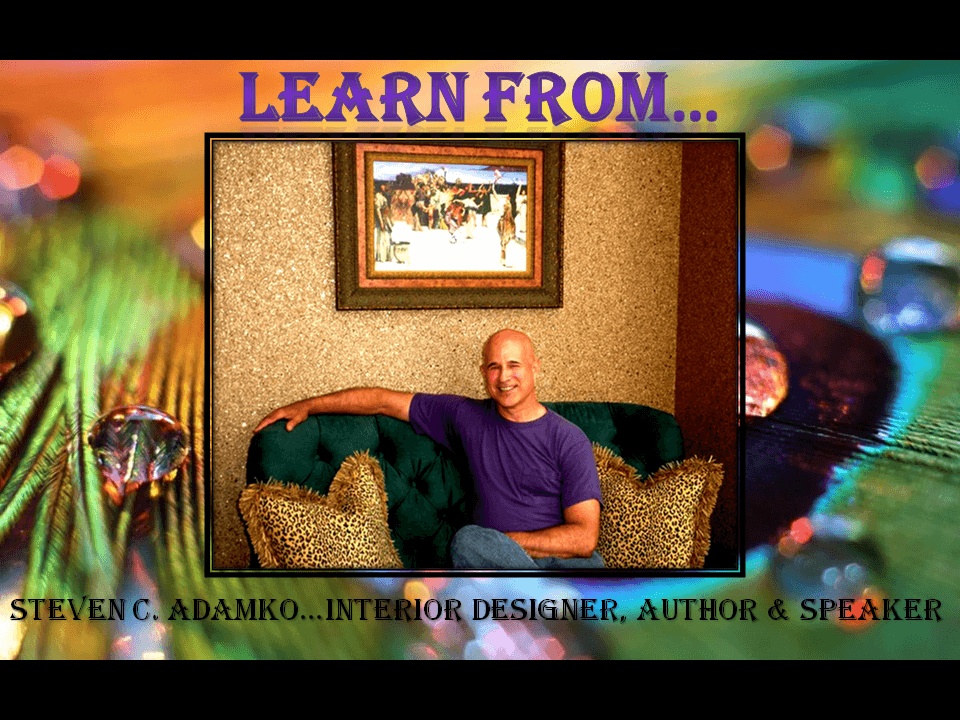
There is a question that has fascinated designers, architects, and homeowners for centuries: why do some homes feel immediately right the moment you enter them, while others—despite significant investment, careful planning, and beautiful furnishings—never quite achieve that same sense of harmony and emotional clarity? The answer is not found in trends, styling preferences, or isolated design choices. It is found in something far more fundamental and far less commonly understood: the underlying principles that govern how human beings experience space, atmosphere, proportion, and visual order. All taught by the sole master interior designer and teacher at the Steve Adamko Interior Design School; none other than Steve Adamko himself.
Most people encounter this difference instinctively before they can explain it. A room may be objectively beautiful, yet feel slightly unsettled. Another may be understated in appearance, yet feel deeply comforting and coherent. This contrast reveals an essential truth that the Steve Adamko Interior Design School is built upon: interior design is not only about what a space looks like, but about what a space does to the human experience over time.
A School Unlike Any Other
The Steve Adamko Interior Design School is not a traditional design program, nor is it a trend-driven collection of decorating techniques or software-based instruction. It is built upon a fundamentally different premise: that the most valuable skill in interior design is not the ability to decorate, but the ability to think like a master designer.
Where most programs emphasize visual output, technical tools, or stylistic categories, this school emphasizes judgment, discernment, and understanding. Students are not taught what to do in a formulaic sense, but rather how to see, how to evaluate, and how to understand why certain environments succeed while others fail.
The Difference Between Knowledge and Wisdom
Knowledge in interior design is abundant and widely accessible. It can be found in books, magazines, digital platforms, and social media feeds filled with curated interiors and design inspiration. Knowledge tells you what is popular, what is current, and what is visually appealing according to prevailing tastes.
Wisdom operates differently. Wisdom explains why something works, why it feels right, and why certain environments remain compelling long after trends have changed. Wisdom is not about information; it is about understanding.
The Steve Adamko Interior Design School is built entirely on this distinction. It does not position itself as a repository of design information, but as a system for developing design judgment.
The Look and The Ambiance
At the center of Steve Adamko’s philosophy is a principle that defines the entire educational model: The Look and The Ambiance.
The Look refers to the visual composition of a space—the furniture, materials, proportions, color relationships, architectural elements, and overall aesthetic structure. The Ambiance refers to the emotional and atmospheric experience of the space—how it feels, how it supports life, and how it shapes daily experience.
Great design does not separate these two elements. It unifies them.
Why Affluent Homeowners Are Drawn to the School
The primary audience for the Steve Adamko Interior Design School is not aspiring professionals seeking credentials, but accomplished individuals seeking understanding. These are homeowners who have already achieved success in business, leadership, or professional life, and who now wish to bring clarity and intention to their living environments.
They are not seeking a career transition. They are seeking confidence in design decisions and a deeper understanding of how their homes work.
The Problem With Modern Design Culture
Contemporary design culture is dominated by rapid change. Trends emerge quickly, circulate widely, and are replaced just as fast. The Steve Adamko Interior Design School rejects this premise and is built on the understanding that principles endure even as styles change.
The Greeks understood proportion and harmony. The Romans understood structure and permanence. French traditions refined elegance and composition. These principles remain relevant because they reflect enduring aspects of human perception.
The Return of the Master-Apprentice Tradition
Historically, architecture and design were taught through apprenticeship rather than institutional instruction. Students learned directly from masters, absorbing not only techniques but ways of thinking.
The Steve Adamko Interior Design School revives this model in a modern digital form, where students learn directly from a practicing master with decades of real-world experience.
More Than a School—A School of Thought
The Steve Adamko Interior Design School becomes more than a curriculum. It becomes a School of Thought—a coherent philosophy of residential design centered on how people experience space.
Students begin to see interiors differently, recognizing relationships, patterns, and principles that were previously invisible.
The Classical Foundations of Steve Adamko’s Design Philosophy
Steve Adamko’s philosophy draws from classical traditions including Greek proportion and harmony, Roman structure and permanence, and French refinement and composition. These are not trends but enduring principles that continue to shape human experience of space.
Why Beautiful Homes Are Often Disappointing
Many homeowners experience the frustration of completing a beautiful renovation that still does not feel fully satisfying. This often occurs when design focuses on appearance rather than experience.
Without attention to proportion, light, circulation, and atmosphere, even visually appealing interiors can feel incomplete in daily life.
Learning to See What Others Miss
Master designers perceive space differently. They understand how proportion, lighting, and circulation influence human experience.
Steve teaches students how to develop this perceptual awareness so they can evaluate spaces with greater clarity and understanding.
The Home as a Reflection of Life
A home is not just a physical environment. It is where life unfolds. It influences mood, relationships, and daily experience in subtle but significant ways.
Design, at its highest level, becomes the intentional shaping of lived experience.
Why Successful People Seek Design Understanding
Many successful individuals feel confident in their professional lives but uncertain in design decisions for their homes. The school provides a structured framework that brings clarity and confidence to those decisions.
The Anti-Trend Philosophy
The school prioritizes principles over trends and permanence over novelty. If a principle remains valid across generations, it holds greater value than any temporary aesthetic movement.
A Category of One
The Steve Adamko Interior Design School does not fit conventional categories. It is a principle-based master-apprentice school grounded in decades of real-world practice and unified design philosophy.
Why Steve Adamko
Steve Adamko’s perspective is shaped by decades of work across multiple disciplines including interior design, residential construction, furniture design, lighting design, and education. As founder of Spectrum Interiors in 1982, his experience spans real-world residential environments where design decisions directly affect lived experience.
This multidisciplinary background allows him to understand residential design as an integrated system rather than a collection of isolated elements.
The Opportunity Before You
The environments we live in shape our daily experience in profound ways, yet most people are never taught how to intentionally design them with clarity or understanding.
The Steve Adamko Interior Design School exists to provide that understanding. It offers access to a way of thinking developed over decades of professional practice and grounded in timeless principles of design.
Once you begin to see how residential environments truly function, your perception of space changes permanently, and so does the way you experience your home.