Why Discerning Homeowners Choose Steve Adamko
Luxury residential design is often misunderstood as a matter of aesthetics, taste, or stylistic preference. In reality, the homes that endure—the ones that feel effortlessly right rather than merely visually impressive—are not the result of decoration. They are the result of integration.
An exceptional residence is not a collection of rooms or finishes. It is a unified environment in which architecture, structure, lighting, proportion, materials, furnishings, and human experience all interact in ways that are largely invisible when done correctly, yet immediately felt when done well. The experience of such a home is not driven by individual design decisions, but by the relationships between them. This is especially important for affluent and discerning homeowners.
This level of coherence is difficult to achieve because it requires a professional who understands not just isolated disciplines, but the connective tissue between them. It demands the ability to think across architecture and construction, across lighting and psychology, across furniture and circulation, across material and atmosphere. In practice, very few professionals ever operate at that level of integration.
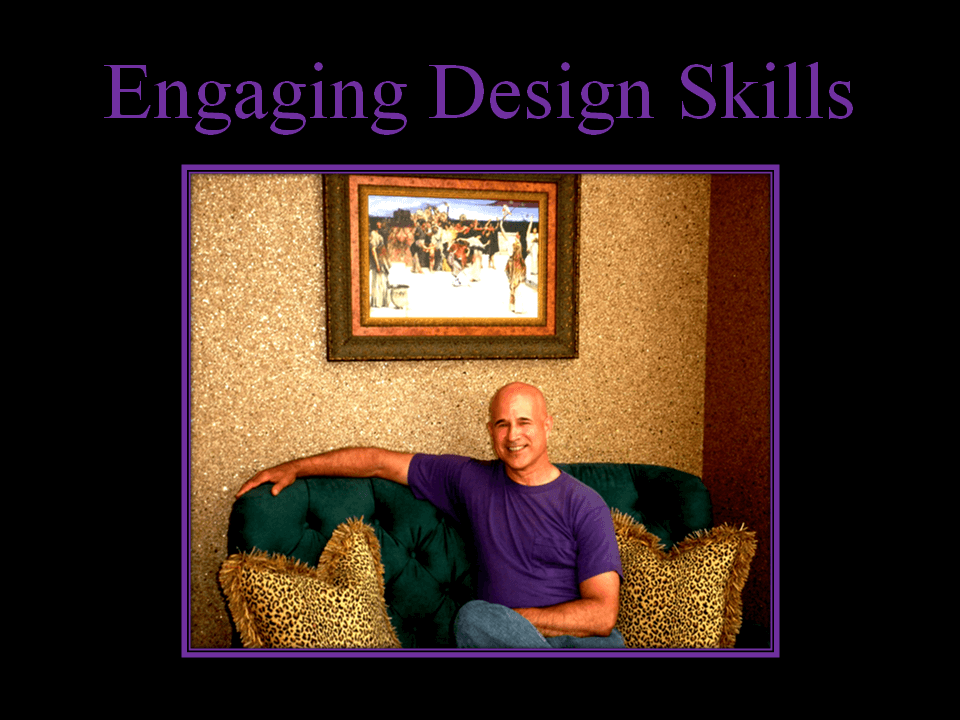
For more than forty years, Steven C. Adamko has built his career around that principle.
As the founder of Spectrum Interiors, Adamko represents a rare kind of residential design professional—one whose work spans interior design, residential construction, lighting design, custom furniture design, and design education. What distinguishes his approach is not simply the breadth of disciplines, but the way they are synthesized into a single, coherent philosophy of residential experience.
At the center of that philosophy is a simple but demanding idea: a home must function as a complete system, not a sequence of disconnected decisions.
The Rare Intersection of Design and Construction Intelligence
One of the most defining aspects of Steve Adamko’s professional background is his dual expertise in interior design and residential construction. He is an NCIDQ-certified interior designer and has been a Michigan Licensed Residential Builder since 1993.
This combination is uncommon—and it fundamentally changes how residential projects are understood and executed.
Most interior designers operate after structural decisions have been made. Most builders execute plans created without deep consideration of interior experience. In many projects, these domains remain separate, which can lead to inefficiencies, misalignment, or missed opportunities.
Adamko works fluently across both. He evaluates homes as integrated systems where structure and experience are inseparable. A wall is not just a boundary; it is a spatial decision. A ceiling is not just a surface; it is a lighting and proportion system. A layout is not just circulation; it is behavior shaped by space.
For homeowners, this integration reduces fragmentation and brings clarity to decisions that are often highly complex. It ensures that architectural intent, construction reality, and interior experience remain aligned from concept through completion.
Experience as Pattern Recognition, Not Just Time
Steve Adamko graduated from the Kendall School of Design in 1979 and founded Spectrum Interiors in 1982. Over the decades that followed, his work expanded beyond traditional interior design into construction, lighting, custom furniture design, and design education.
But the true value of long experience is not time—it is judgment formed through repetition and consequence.
After four decades of residential work, Adamko has developed an ability to recognize patterns in how spaces succeed or fail. He can anticipate where proportion will feel off, where circulation will break down, where lighting will flatten architecture, or where material choices may undermine long-term livability.
This kind of insight is not theoretical. It is earned through thousands of real-world design decisions and the accumulated understanding of how homes actually function over time.
The Home as a Single Living System for Affluent and Discerning Homeowners
In most residential projects, disciplines operate in sequence: architecture first, interiors second, lighting later, furnishings at the end. Even when each phase is well executed, the separation can create subtle misalignments that affect the final experience.
Adamko approaches residential design differently. He treats the home as a single living system in which every decision influences every other decision.
Architecture defines potential. Lighting defines perception. Furniture defines movement. Materials define emotional tone. Proportion defines comfort. None of these elements exist independently in a truly successful home.
When integrated properly, these relationships become invisible. The home simply feels right—cohesive, intuitive, and complete.
The Discipline of Client Understanding and Design Education
One of the most distinctive aspects of Steve Adamko’s practice is his commitment to explaining design thinking throughout the client experience.
Rather than simply presenting conclusions, he explains the reasoning behind them. He articulates why proportions work, why lighting decisions are made, how circulation is shaped, and how materials support the broader architectural intent.
This transforms the design process into an informed dialogue rather than a one-way presentation of expertise. Clients become participants in understanding the logic behind their own environment.
This educational approach extends beyond private client work. Adamko also shares design thinking publicly through YouTube seminars, his podcast Interior Design Beat, and the DesignAmbiance channel, where he explores the principles behind residential design in a broader and more accessible format.
Together, these platforms reflect a consistent philosophy: design is not just something to be delivered, but something to be understood.
Lighting, Furniture, and the Architecture of Experience
In many residential projects, lighting and furniture are treated as secondary layers. In Adamko’s work, they are foundational.
Lighting is approached as a tool of perception, shaping how architecture is experienced throughout the day and influencing the emotional tone of each space. Furniture is treated as an extension of spatial composition, often designed specifically to align with proportion, circulation, and architectural intent.
This level of integration produces interiors that are not assembled, but composed—where every element contributes to a unified experience.
Interior Design Beat and DesignAmbiance: Thinking Made Visible
Beyond his residential practice, Steve Adamko extends his thinking into public-facing platforms that reflect his analytical approach to design.
Through the Interior Design Beat podcast, he explores the principles, decisions, and challenges that shape residential environments, focusing on why design works rather than simply what it looks like.
Through the DesignAmbiance YouTube channel, he translates design thinking into visual explanation, demonstrating how space, proportion, lighting, and atmosphere interact in real-world environments.
These platforms reinforce a consistent truth: his work is not only practiced, but continuously examined, articulated, and refined.
Ambiance as the True Measure of Design
At the core of Steve Adamko’s philosophy is the concept of Ambiance.
Ambiance is not style or decoration. It is the cumulative result of relationships between architecture, lighting, materials, furnishings, proportion, and human experience.
A home with true ambiance does not rely on visual impact. Instead, it creates emotional coherence—an immediate sense of ease, continuity, and alignment that is felt rather than analyzed.
This is where design becomes experiential rather than visual, and where residential environments begin to feel genuinely complete.
Why Affluent and DiscerningHomeowners Ultimately Choose Steve Adamko
Homeowners do not engage Steve Adamko because of a single credential or title. They engage him because he operates at a level where those distinctions become secondary to integrated capability.
They work with him because he understands construction and design as a unified discipline. They work with him because he sees relationships others miss. They work with him because he integrates architecture, lighting, furnishings, and spatial experience into a coherent whole. They work with him because he brings clarity to complexity through explanation and reasoning.
Ultimately, they are not simply creating a beautiful home. They are creating a home that feels right in a way that endures—functionally, emotionally, and experientially.
Begin the Conversation
Every exceptional residence begins with a conversation. It entails asking the Right Questions, to get the Right Answers, to Deliver Accurately and Precisely the Right Tailored Results.
If you are considering a luxury renovation, custom residence, estate property, major addition, or comprehensive interior transformation, Steve Adamko welcomes the opportunity to understand your goals, your lifestyle, and your vision for your home.
The most successful homes are not accidental. They are the result of clarity, experience, and integration applied with discipline over time.
That is where the process begins.
Contact Steve Adamko @ 269-888-2049 (Landline)